Discover why Kapalbhati Pranayama is called the life-giving force of the earth. Learn the science, spirituality, and safe practice behind this ancient yogic breath. Explore routines, common mistakes, precautions, and modern research that reveal its power to heal body, mind, and soul.
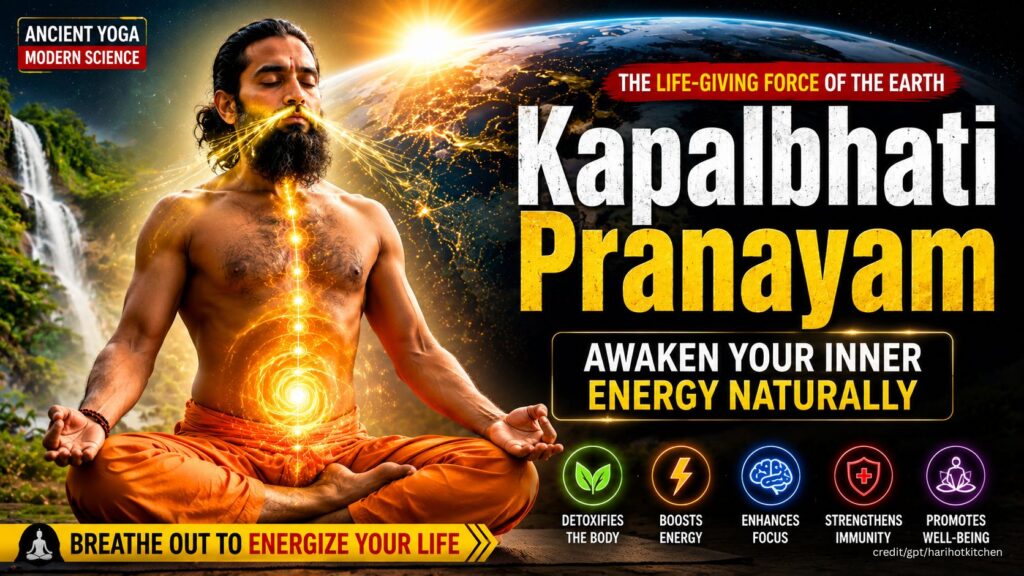
🌿 Breathing Life Back Into Our Body — My Personal Experience with Kapalbhati
A few years ago, I used to wake up most mornings feeling heavy, low on energy, and uncomfortable with digestion issues. Someone casually suggested that I try Kapalbhati Pranayama. To be honest, I didn’t expect much — I thought, “How much difference can breathing really make?”
But after practicing it consistently for a few weeks, I started noticing real changes. My body felt lighter, my digestion improved, and most surprisingly, my mind felt clearer and calmer throughout the day. That’s when I truly understood that breath is not just air. In yoga, breath is known as Prana — the life force that keeps everything alive and active.
Kapalbhati is one of those powerful practices that awakens this inner energy. Ancient yogis often called it the life-giving force of the earth, because just like nature continuously cleanses and renews itself, Kapalbhati helps cleanse the body from within and recharge our energy.
In this article, I’ll share:
- What Kapalbhati really means
- How it works from a scientific point of view
- How to practice it safely
🕉️ What Exactly Is Kapalbhati Pranayam?
The Sanskrit word Kapalbhati comes from “Kapal” (skull) and “Bhati” (shine or light) — together meaning “the shining skull.” This name beautifully captures what it does: it cleanses your head, mind, and energy, leaving you radiant and clear.
Unlike other breathing practices that focus on slow inhalation, Kapalbhati emphasizes forceful exhalations. Each exhale expels stale air and toxins, making space for fresh oxygen — the same way the Earth releases carbon and renews itself every day.
📜 Historical Roots and Spiritual Meaning
Ancient texts like the Hatha Yoga Pradipika mention Kapalbhati and Gheranda Samhita, where it’s listed among the Shatkarmas — the six cleansing actions of yoga.
In ancient times, yogis practiced Kapalbhati to:
- Purify the mind for meditation,
- Ignite the digestive fire (Agni), and
- Awaken spiritual energy (Kundalini).
The practice symbolizes renewal — just like the Earth’s natural cycles of destruction and rebirth.
🧬 Scientific Studies on Kapalbhati’s Health Effects
You might wonder: Does science really back this up? Absolutely — several studies have explored Kapalbhati’s effects on the body and mind.
- Heart and Nervous System Balance:
Researchers at AIIMS (India) observed that Kapalbhati temporarily increases heart rate and blood pressure — similar to mild aerobic exercise — but results in parasympathetic rebound relaxation afterward. That’s why many practitioners report feeling calm and clear right after practice. - Metabolic Improvements:
Studies in yoga therapy journals show improved insulin sensitivity and fat metabolism among regular Kapalbhati practitioners. It may support weight management when combined with asanas and a healthy diet. - Mental Health & Stress Reduction:
Breathing-focused interventions like Kapalbhati lower cortisol levels (the stress hormone), while improving alpha brain waves — associated with relaxed alertness and creativity. - Lung Capacity and Immunity:
Regular practice enhances respiratory efficiency and oxygen uptake, vital for immunity and stamina. In short, what ancient yogis intuited — modern research now echoes: Kapalbhati invigorates yet relaxes.
⚖️ Kapalbhati vs Other Pranayamas — Finding Your Balance
Yoga offers many breathing styles, and each serves a unique purpose. Let’s see how Kapalbhati compares:
A balanced routine includes both stimulating pranayamas like Kapalbhati and calming ones like Anulom Vilom.
While Kapalbhati focuses on forceful exhalations to detoxify and energize, best practiced in the morning, other pranayamas serve different purposes.
Anulom Vilom (Alternate Nostril Breathing) uses slow, balanced breaths to calm the nerves and can be done anytime.
Bhastrika (Bellows Breath) employs strong inhalations and exhalations to build heat and energy, ideal for cold mornings. For evening practice, Bhramari (Bee Breath) uses a gentle humming exhale to reduce anxiety and prepare the mind for sleep.
💨 How to Practice Kapalbhati Step-by-Step
- Sit comfortably in Padmasana or Sukhasana with your spine straight.
- Take a deep inhalation through the nose.
- Forcefully exhale through the nose, contracting your lower abdomen inward.
- Allow the inhalation to happen naturally.
- Continue this rhythm for 20–30 strokes, rest, then repeat 2–3 rounds.
Focus your attention between the eyebrows (Ajna Chakra) as you practice.
⚠️ Common Mistakes & How to Fix Them
Here are a few mistakes I often see (and how to correct them):
Remember — Kapalbhati is a dialogue with your breath, not a battle against it.When starting, it’s common to see practitioners breathing too fast or hunching the back. Remember to prioritize a steady rhythm over speed and keep your spine erect. Always practice on an empty stomach, waiting 2-3 hours after a meal. If you feel any dizziness or strain, pause immediately and return to normal breathing. Most importantly, Kapalbhati is a dialogue with your breath, not a battle—only the exhalation should be active, while the inhalation happens naturally
🩺 Precautions and Medical Conditions to Consider
While Kapalbhati is powerful, it’s not suitable for everyone. Avoid or modify the practice if you have:
- High blood pressure or heart disease
- Hernia or recent abdominal surgery
- Pregnancy
- Eye conditions (like glaucoma)
- Asthma or severe respiratory issues
- Recent stroke or neurological disorders
If you have diabetes or thyroid conditions, practice gently under guidance. Always listen to your body — it’s your best teacher.
Personal Hygiene for Kids: जबरदस्त और आसान tips, बच्चे खुद सीखेंगे साफ-सफाई
🧘♀️ Yoga Routines that Enhance Kapalbhati Benefits
Want to get the most from your breathing practice? Pair it with supportive yoga routines.
✨ Quick Morning Energizer (15 minutes):
- 2 minutes mindful sitting (observe breath)
- 3 rounds of Kapalbhati (30 strokes each)
- 2 rounds of Anulom Vilom
- 5 Sun Salutations (Surya Namaskar)
- End with 3 minutes in Shavasana
🌕 Deep Rejuvenation Flow (30–40 minutes):
- Gentle stretching and spine rotations
- 8 Sun Salutations
- 4 rounds Kapalbhati (gradually increase count)
- 3 rounds Bhastrika
- Seated meditation or chanting (5–10 mins)
- Complete rest in Shavasana
These flows create harmony between energy (Prana) and calm (Apana).
🌿 Spiritual Benefits — Awakening the Inner Prana
With regular practice, you’ll notice subtle yet profound shifts:
- A sense of lightness and mental clarity
- Enhanced focus and intuition
- Emotional stability
- A deeper connection to nature and inner stillness
In yogic philosophy, Kapalbhati awakens the Ajna Chakra (Third Eye) — opening pathways to higher awareness.
🙋♀️ FAQs About Kapalbhati Pranayama
Q1. Why is Kapalbhati called the life-giving force of the earth?
Because it symbolizes renewal — just like the Earth exhales toxins and inhales purity, this breath restores your body’s natural vitality.
Q2. Can beginners practice it?
Yes! Start slow — 20 strokes per round, gradually increasing with comfort.
Q3. How long before I see results?
Most people feel energized and mentally clear after just one session. Consistency brings lasting results.
Q4. Can it help with weight loss?
Yes, by improving metabolism and stimulating abdominal muscles.Q5. Can I practice it daily?
Absolutely. Just practice on an empty stomach and stay mindful of your energy.
🌺 Conclusion — The Breath That Connects You to the Earth
When you breathe consciously through Kapalbhati, you’re not just doing an exercise — you’re syncing your rhythm with the Earth’s own breath. Each exhale purifies, each inhale nourishes.
That’s why Kapalbhati Pranayama is called the life-giving force of the earth — it sustains not only your physical body but also your inner light.
So tomorrow morning, when you sit quietly and start breathing, remember — you’re joining a conversation that has been happening for millions of years between the Earth and every living being
Yoga Journal, “How to Practice Kapalbhati”like: “We’d love to hear about your experience with Kapalbhati. Share your journey in the comments below!”
Author:
Hari Prasad हिंदी में हेल्थ टिप्स, पौष्टिक खानपान और भारतीय रेसिपी से जुड़े विषयों पर लेख लिखते हैं। उनका उद्देश्य सरल भाषा में स्वाद, सेहत और उपयोगी जानकारी को एक साथ पाठकों तक पहुंचाना है।
Disclaimer
The information provided on this blog is for general educational and informational purposes only and should not be considered medical advice. While we strive to share accurate and up-to-date health information, we do not guarantee the completeness, reliability, or accuracy of any content. Always consult a qualified doctor, healthcare professional, or medical expert before starting any diet, exercise, medication, or treatment. Any action you take based on the information from this blog is strictly at your own risk. This blog and its owner will not be responsible for any losses, injuries, or health issues resulting from the use of our content.
90% लोग खा रहे हैं मिलावटी घी और पनीर! पहचानें असली-नकली और जानें नुकसान